Now live in Rourkela & Sambalpur · Urgent dispatch: 90908 07015 · 30-min callback guaranteed

Rent My Machine
Equipment Guide

Heavy Lifting

Heavy lifting operations carry the highest risk of any construction activity and demand precisely matched equipment, certified operators, and a documented lift plan before the hook goes up. The machines below cover structural steel erection, precast installation, and heavy equipment placement — the three most common heavy lifting scenarios in Odisha.

3 recommended machines for this project type
Heavy Lifting

Recommended Equipment

What to rent and why

01Heavy single lifts & tandem operations

Hydraulic Truck Crane

Why for Heavy Lifting

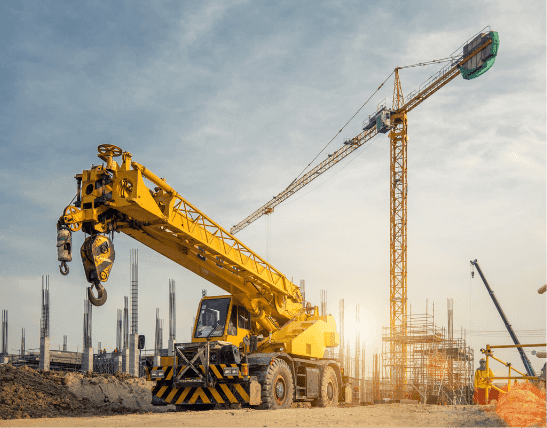
Hydraulic truck cranes (50T–300T) are the primary tool for heavy structural lifts — steel trusses, precast girders, large HVAC units, and transformer installation. They set up quickly, achieve high load capacity at close radius, and are self-propelled for repositioning between lifts. For a single heavy lift, a truck crane is almost always the most economical and fastest solution.

View available Hydraulic Truck Cranes
Best practice

Every lift above 75% of rated capacity requires a formal lift plan reviewed by a competent person before execution. Ground bearing pressure at the outrigger pads must be calculated — cranes tip sideways, not backwards. Use certified rigging only and verify sling angle calculations before every lift.

Enquire about Hydraulic Truck Crane
02Sustained multi-floor erection work

Mobile Tower Crane

Why for Heavy Lifting

For multi-storey construction where dozens of lifts are required over weeks or months, a tower crane is more economical than repeated truck crane visits. A tower crane covers the entire building footprint from a fixed position, works simultaneously with other site operations, and delivers a consistent, programmable cycle time.

View available Mobile Tower Cranes
Best practice

Tower crane foundation design must account for maximum overturning moment during erection and tie-in — this requires structural engineering input. Plan mast climbing intervals in advance to match your floor cycle. Never leave the crane free-slewing in winds above the rated limit.

Enquire about Mobile Tower Crane
03Elevated material placement & floor distribution

Telescopic Handler (Telehandler)

Why for Heavy Lifting

A telehandler bridges the gap between a forklift and a crane — it can reach over obstacles, place materials on upper floors, and handle loads in restricted areas where a crane cannot work. For masonry, precast facade panels, and roofing material distribution across a building floor plate, telehandlers dramatically reduce manual handling and double material placement productivity.

View available Telescopic Handler (Telehandler)s
Best practice

Always use the load moment indicator (LMI) — capacity drops sharply with extended reach. On upper floor slabs, verify that the imposed load from the machine plus its load does not exceed the slab's design capacity before driving on. Use stabilisers whenever working at maximum reach.

Enquire about Telescopic Handler (Telehandler)

Ready to get started

Need equipment for Heavy Lifting?

Tell us your project scope and we will match the right machines with certified operators — and confirm mobilisation within 30 minutes.