Now live in Rourkela & Sambalpur · Urgent dispatch: 90908 07015 · 30-min callback guaranteed

Rent My Machine
Equipment Guide

Foundation Work

Foundation work is the most critical phase of any construction project. Getting the right equipment on site early — and in the right sequence — determines the pace of everything that follows. The machines below cover every stage from pile installation to slab pour.

3 recommended machines for this project type
Foundation Work

Recommended Equipment

What to rent and why

01Deep foundation installation

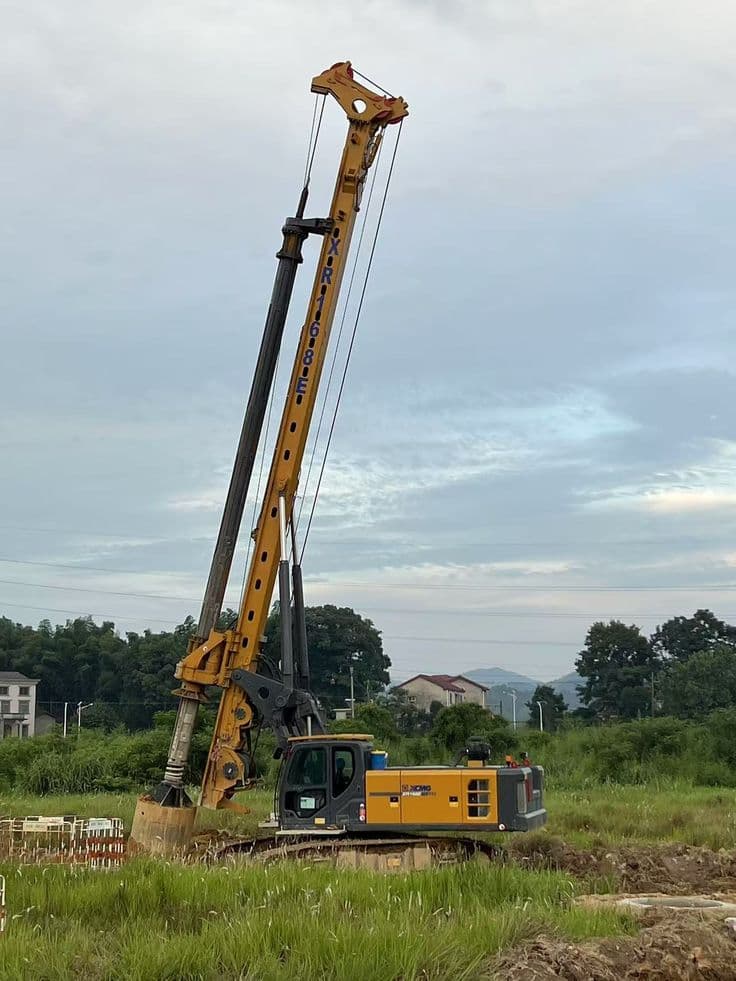
Piling Rig

Why for Foundation Work

Piling rigs are the first machine on site for any multi-storey or heavily loaded structure. They install bored piles that transfer column and wall loads to competent bearing strata, bypassing weak topsoil layers. For Odisha's coastal and alluvial soil conditions, bored piling is standard practice on any building over 4 storeys.

View available Piling Rigs
Best practice

Complete soil investigation (bore logs at each pile location) before mobilising the rig. Rig selection depends on pile diameter and depth — share your structural engineer's pile schedule with us so we can match the right machine to your design.

Enquire about Piling Rig
02Bulk excavation & pile cut-off

Excavator

Why for Foundation Work

After piling, an excavator performs bulk excavation down to the pile cap and raft level. It also handles pile head cut-off — trimming piles to the correct cut-off level — and trench digging for grade beams and underground utilities. A 20T excavator is the standard workhorse for most residential and commercial foundation excavations.

View available Excavators
Best practice

Excavate in lifts of 1.5–2m to maintain slope stability. For deep basements, bench the excavation or install shoring before proceeding. Never excavate below the toe of an adjacent structure without a support system in place.

Enquire about Excavator
03Pile concrete & raft slab pour

Concrete Pump

Why for Foundation Work

Concrete pumps enable continuous, high-volume placement of concrete into pile bores and large raft slabs. A trailer pump is sufficient for most pile concreting; a boom pump is used for large raft pours where the transit mixer cannot reach the pour face directly. Pumping also reduces concrete segregation compared to crane-and-skip methods.

View available Concrete Pumps
Best practice

Prime the pump with a cement slurry before starting concrete placement. Plan the pour sequence so the pump moves progressively — avoid dragging wet concrete long distances. Always have a vibrator team ready at the point of placement.

Enquire about Concrete Pump

Ready to get started

Need equipment for Foundation Work?

Tell us your project scope and we will match the right machines with certified operators — and confirm mobilisation within 30 minutes.